
Kitchen Layout. What works and what doesn’t.
14 Min.Your kitchen layout is critical to the flow and utility of the kitchen. When remodeling your space, it may be tempting to simply replace the old cabinets with new and call it good. But with a little time and investigation you may find that a different layout will work better for you. There are a few basic layouts that are the starting point for most kitchens, read on and find your perfect kitchen layout.

galley kitchen
A typical galley kitchen layout has two straight rows of cabinetry facing each other with a space between them.
The Pros: This layout is an efficient use of space and is technically easy to design and build so if you’re working on a budget, the galley kitchen will give you the best bang for your buck. This space has no corners and thus avoids the need for complicated (and often expensive) corner cabinetry designs and accessories.
The Cons: A galley kitchen layout can feel tight if there are multiple people working at the same time. There’s only so much room between the rows of cabinetry and that can lead to traffic issues. This layout can also feel dark, especially if there are a lot of upper cabinets and few windows.
How to make it work: Make sure your appliances are to scale with the space, consider smaller European brands, and counter depth options. Be thoughtful with your lighting. Bring natural feeling light to your work areas with under cabinet lights and well chosen ceiling lights. Take cabinet finish into account – if your galley is small and lacking in light, consider lighter cabinetry, at least for the upper cabinets.
L shaped kitchen
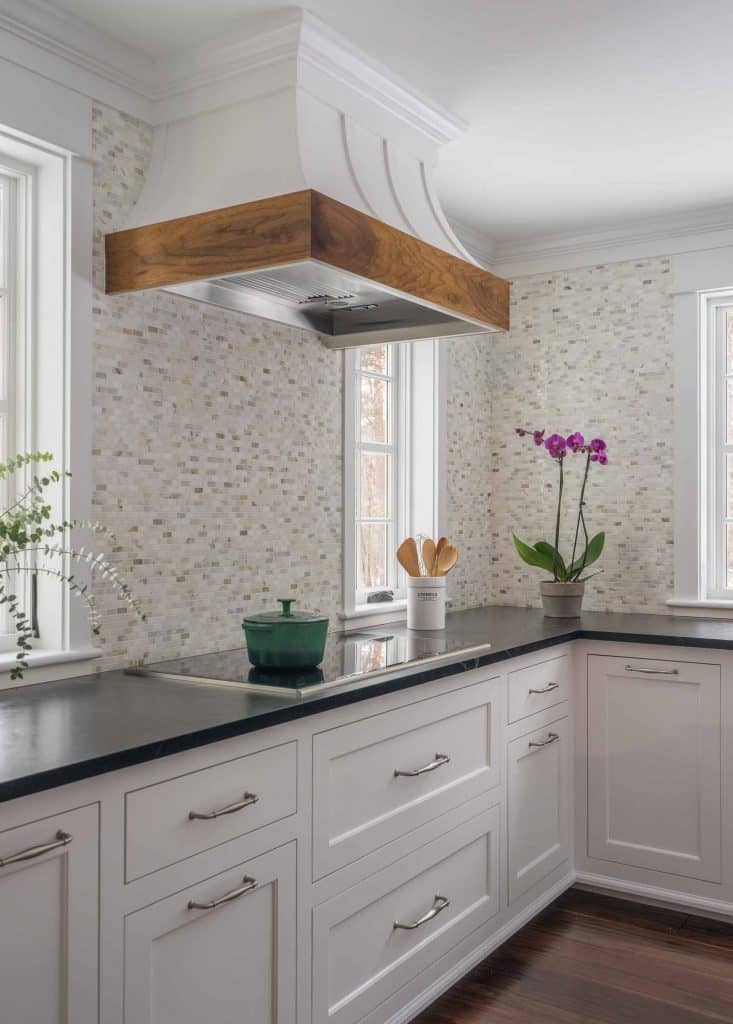
The L shape kitchen layout is both practical and versatile. It continues to be very popular because it works well in an open concept kitchen and living area. An L shape layout is comprised of two perpendicular runs of cabinetry.
The Pros: An L works well for larger and smaller spaces as each part of the L can be shortened or lengthened to perfectly fit the space. The open plan feel of an L allows for a lot of cabinetry, thus providing ample storage. Appliances can be strategically placed to allow room to move in the kitchen.
The Cons: The traditional work triangle is a challenge in this layout, which may mean more steps between sink, range and refrigerator. Perpendicular work spaces can be tricky for multiple cooks at one time. Corner cabinets can be difficult to accessories and may require additional accessories.
How to make it work: Be creative with your corner solutions. There are many efficient ways to access the back of your corner cabinets (that are more fun than the old Lazy Susan). Organize your space into zones – prep, clean up and cook and space your appliances accordingly.

U Shaped Kitchen
The U shaped kitchen layout consists of cabinetry that runs along three adjacent walls.
Pros: This kitchen layout offers a lot of storage space as well as easy options to create work zones and work triangle flow. The distance between the work areas is minimal which makes for a smooth prep to cook to clean up flow. Guests can move through easily, without getting in the cooks way.
Cons: This layout works best in a larger area, it can feel cramped. Within the U are two corner cabinets, doubling the number of interior cabinet accessories you’ll need to access the back of those cabinets.
How to make it work: Keep window areas open and uncluttered to allow light in the space. The U layout works perfectly for an uninterrupted work triangle, so keep this appliances and sink together, near the back of the space.

Island Kitchen
An Island is generally added to an L shaped or one wall layout to create additional prep, cooking and storage space. A kitchen island is freestanding and not attached to either walls or other countertops.
Pros: An island kitchen layout opens up a world of possibilities for kitchen use. The island could have appliances, and become a cooking area. It could have a sink and be used primarily for food preparation. Generally islands are also social spaces with the outer side Including a seating area. This is not only a pleasant way for the cook to spend time with guests and family, it also provides a gentle barrier into their workspace.
Cons: Typically the biggest downside to having an island in your kitchen is the space that it requires. Because islands are so popular they are often crammed into kitchens that would be better suited with a different layout. An island is only useful if it properly fits your space.
How to make it work: Design your island on a scale that fits your room. Add in the amenities that work for your kitchen life. Test out your island fit by taping it’s outline onto the floor and doing some practice runs.

Peninsula As an Island Alternative: If your space simply won’t allow for an island, consider a peninsula. The peninsula layout incorporates a kitchen counter that juts out from a wall or cabinetry. This is a great solution that offers the benefits of a kitchen island without requiring the same amount of open space.
the perfect kitchen layout for you
Need help figuring out the best layout for your space? Come and visit a JF Showroom and one of our skilled designers will help you find the perfect fit for your new kitchen.

JF Content creator and marketing director. Olivia loves beautiful spaces, inside and outside. When she’s not writing and talking about gorgeous kitchens Olivia can be found riding her bicycle around the country.